
I am a PhD Doctor in linguistics and a speech and language pathologist, which means I spend my days surrounded by words, voices, and brains that do fascinating (and sometimes unpredictable) things. I study and treat language and voice disorders at the Hospital Sant Joan de Déu, where every day I learn more than I teach.
I also teach at several universities and try to publish as much as I can in scientific journals, because sharing what you know is a wonderful way to continue learning. But since I’m very geeky (my enthusiasm is contagious), I also love taking linguistics and speech and language pathology out of the classroom and the clinic and bringing them to the general public. I’ve designed exhibitions, written books and told stories on my podcast that explain why talking and understanding each other is not as simple as it seems.
Why voice, language and communication?
These three things are so inherent to us that they often become transparent and it is difficult to take distance to analyze them in a precise way that guides our practice. These are some of the questions that I ask myself, always with a critical, scientific and social perspective.
A great power
With just a few movements of the mouth, like very rapid firecrackers, we can introduce ideas into the minds of others and influence what they think, what they feel or what they do. This is a great power, a huge power.
Voice and self
The voice is something inseparable from identity. It is like an intimate mesh that holds and defines how we want to be perceived. When the mesh breaks, something deep within us cracks… as if we stop, in part, being ourselves.
Evidence-based practice
Doing science often involves going against common sense. Who would have thought that? Evidence-based practice requires reviewing what we learn, questioning routines, and monitoring our own biases.
The right to communicate
Every person with a disability, regardless of the type, has the fundamental right to be able to influence their environment and their life through communication. As speech therapists, it is our duty to facilitate communication to all the people we treat.
See, read, listen
-
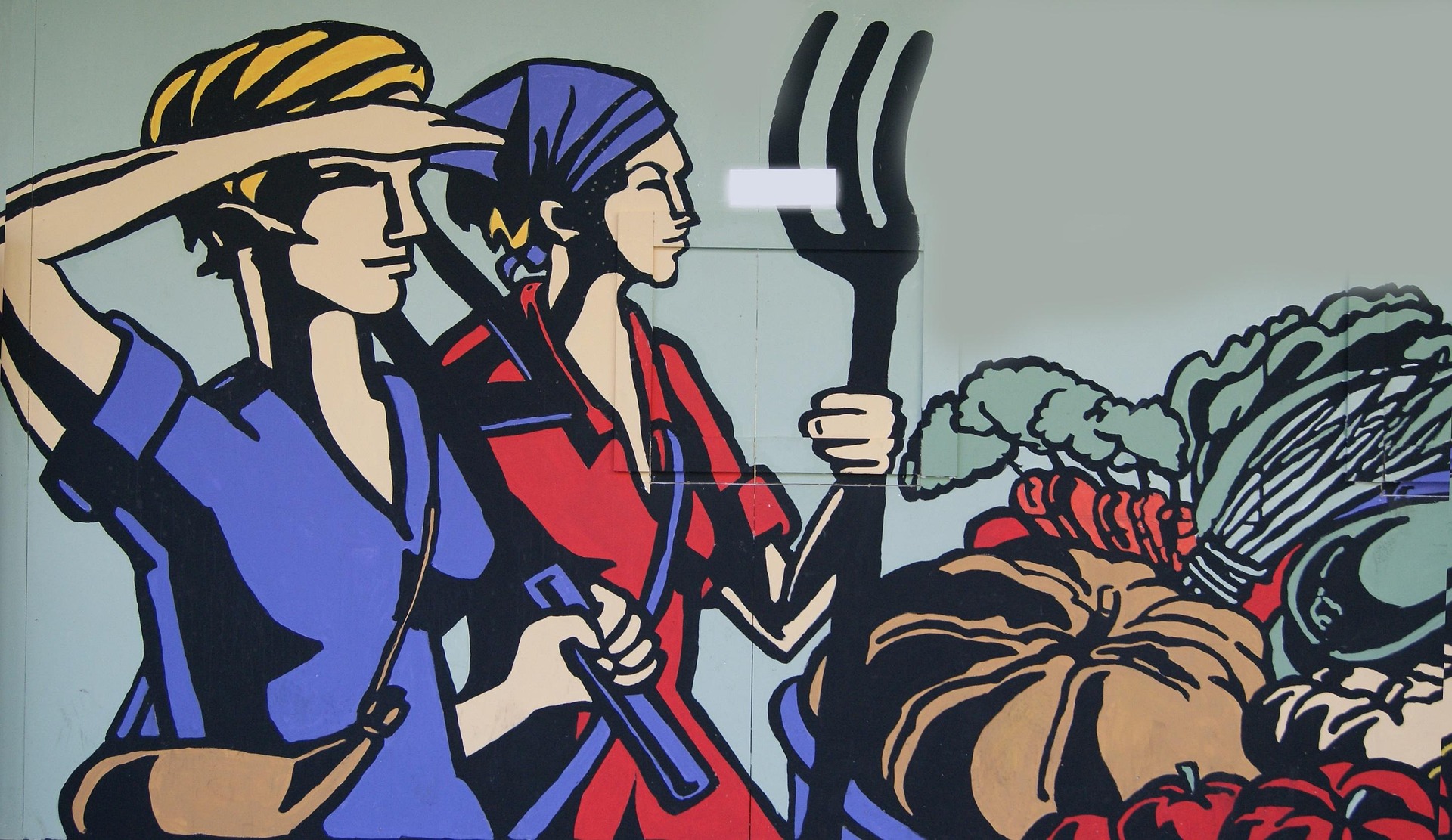
Speech and Language Therapy and women. Sometimes, I see women
Speech therapy, despite being a profession mostly practiced by women, continues to drag gender inequalities in areas such as research, teaching and clinical practice. In this article, we explore how gender stereotypes, structural biases and female underrepresentation in positions of responsibility affect the profession. From a feminist perspective, tools and reflections are proposed to promote…
-
Against common sense. Evidence-based practice
When you chose to study speech therapy, you may not have thought that you would also enter the world of science. This article explores why experience, common sense and good faith are not enough to guarantee effective intervention, and claims the importance of evidence-based practice in speech therapy. To provide quality care and protect the…
-
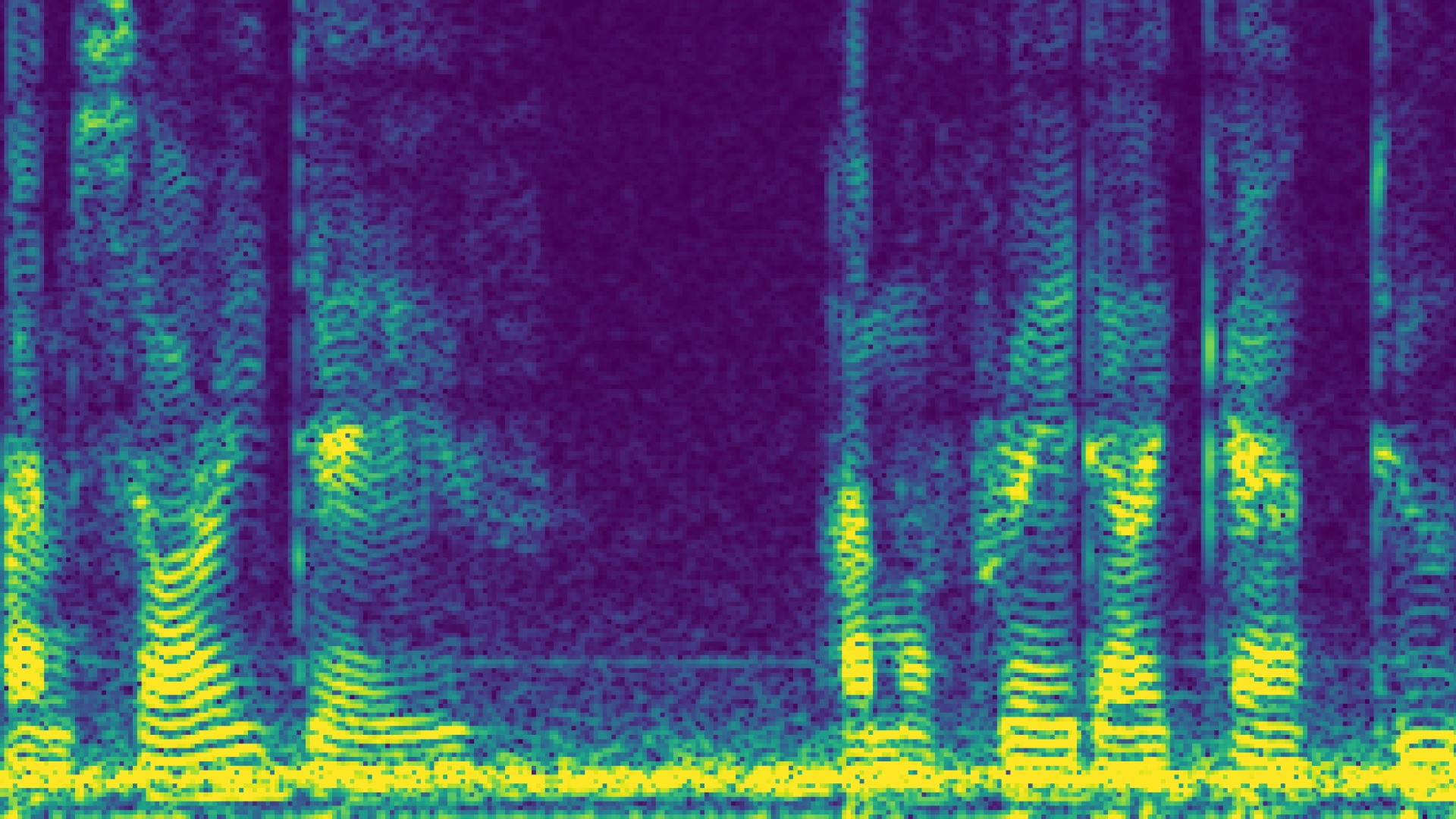
Linguistics applied to Speech and Language Therapy. The difference betewen phonetics and phonology
I share with you an explanation of the difference between sound and phoneme. There is a monumental confusion between the two entities and they are often used as synonyms, although they are different things. Phonemes and sounds are even studied by different disciplines! It is not easy to understand at first, but the distinction is…
«Anybody can speak about language»
We all can talk, yes. But just because we all know how to talk doesn’t mean we understand how language works. Just as having a heart doesn’t make you a cardiologist, using words doesn’t make you a linguist or a speech therapist.
To study human language is to delve into its invisible architecture: how it is acquired, how it is altered, how it changes over time or according to context. It is a complex system, full of nuances, and knowing it in depth requires more than just speaking it: it requires observing, investigating and, above all, asking yourself many questions.
-
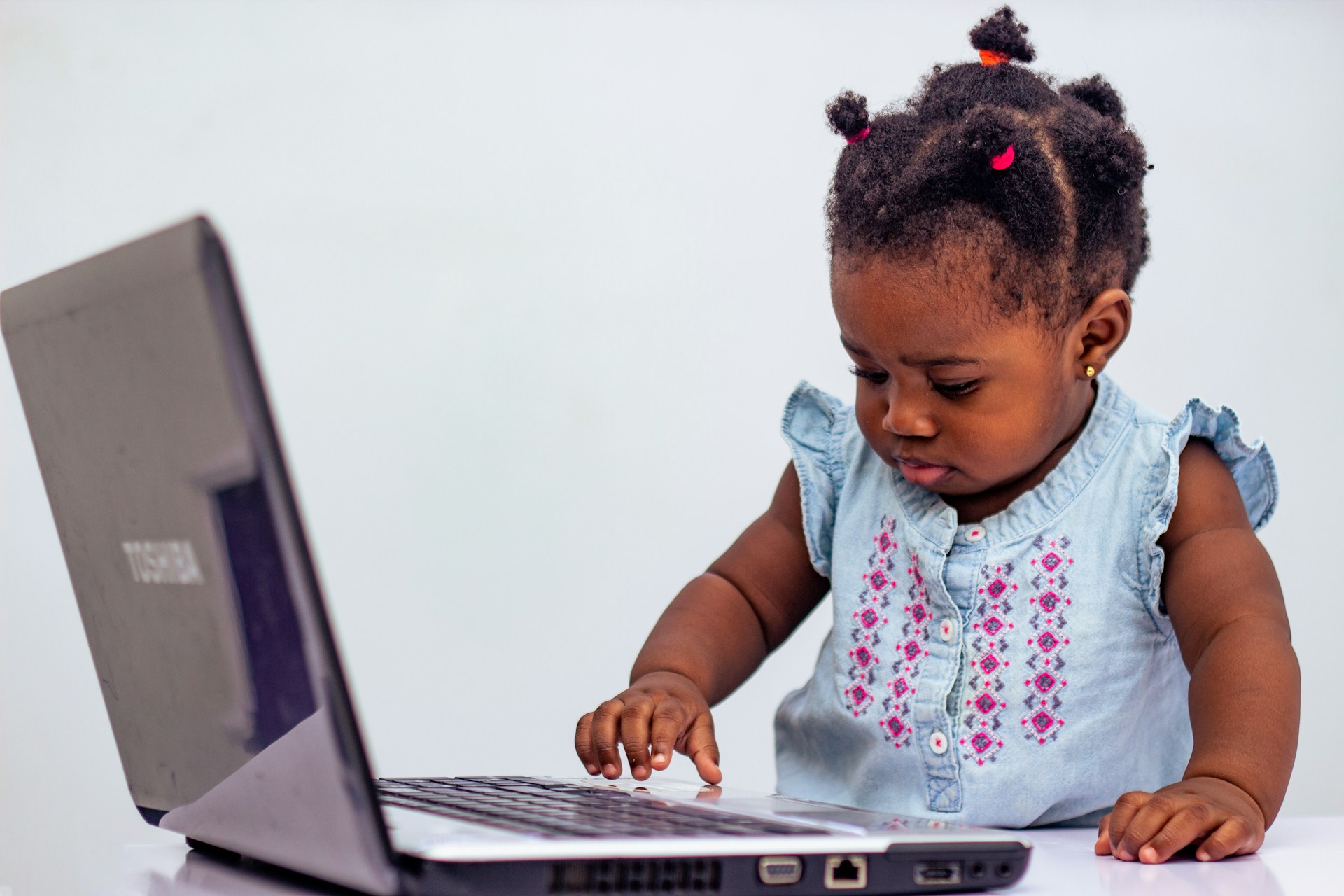
Screens, children, and development
We live surrounded by digital media 24 hours a day, whether it’s mobile phones, tablets, smart watches, computers or advertising screens. Most of the population has had to learn to navigate this omnipresent exposure already in adulthood. New generations, on the other hand, have begun to interact with the digital environment from birth. This relationship…
-
Speech and Language Pathology and Bioethics. A conversation with Montserrat Esquerda
As part of the monograph on speech therapy and bioethics that we produced at the Catalan Association of Speech Therapists, we were able to count on the collaboration of Montserrat Esquerda, dean of the Faculty of Health Sciences at the Ramon Llull University, professor at the Borja Institute of Bioethics-URL and pediatrician in the Mental…
-
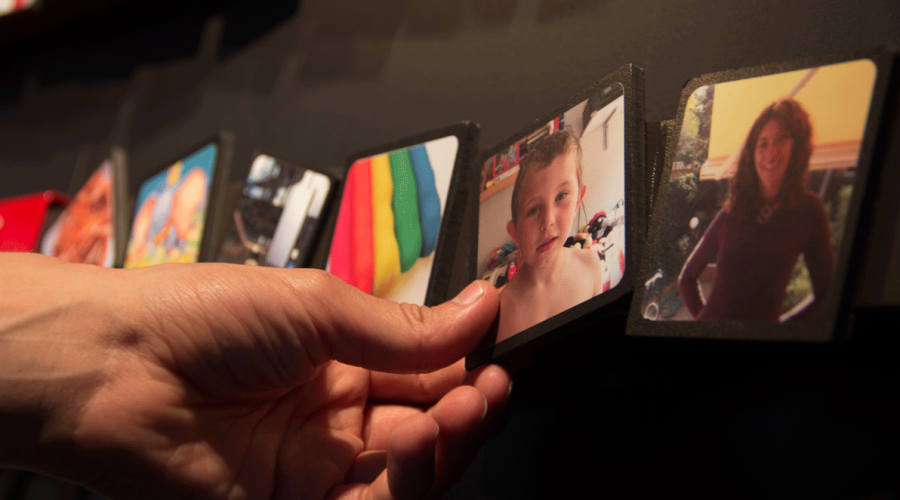
A short documentary on nonverbal autism
While we were creating the Talking Brains exhibition, we did a documentary about a child with nonverbal autism, Dídac. We went to his home and shot some scenes with him and his mother, Verónica. We wanted to raise the question of what happens when one does not have language. Imagining a nonverbal world is something…
I write because researching is not enough: you have to show and tell
Publications
Here you will find scientific publications, where I share findings with colleagues in the clinical and linguistic fields, as well as informative texts designed for curious minds, without the need for a lab coat or technical terminology. Because language runs through us all and understanding how it flows (or how it crumbles) can make us look at the world in a different way.
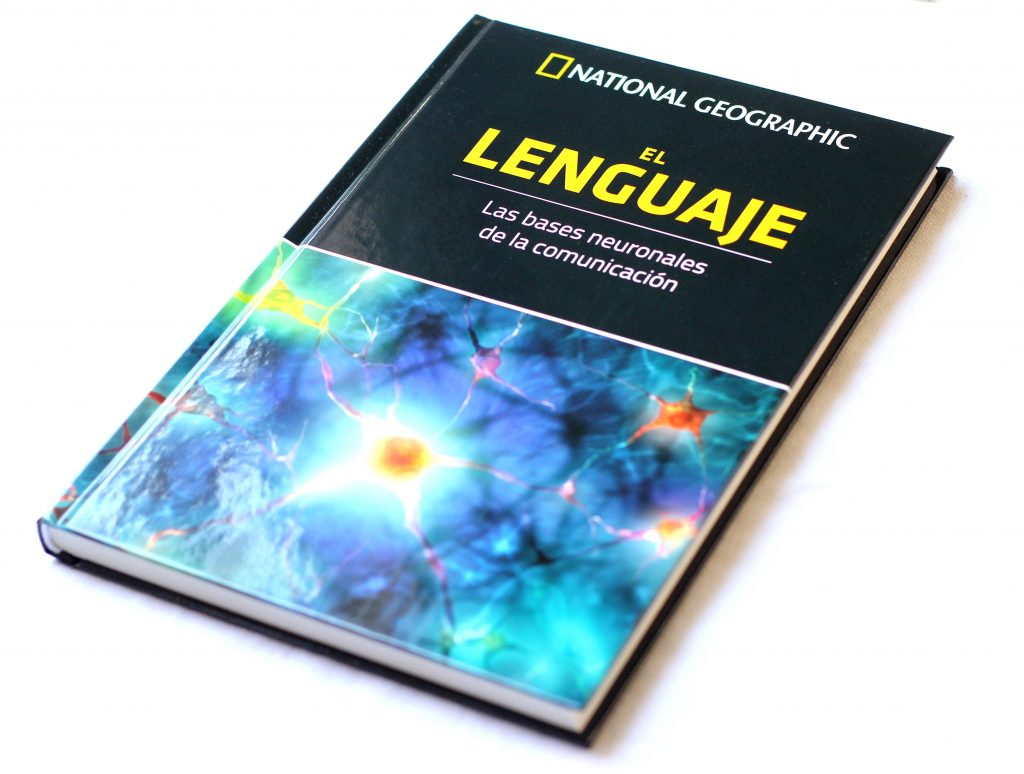
Science popularization
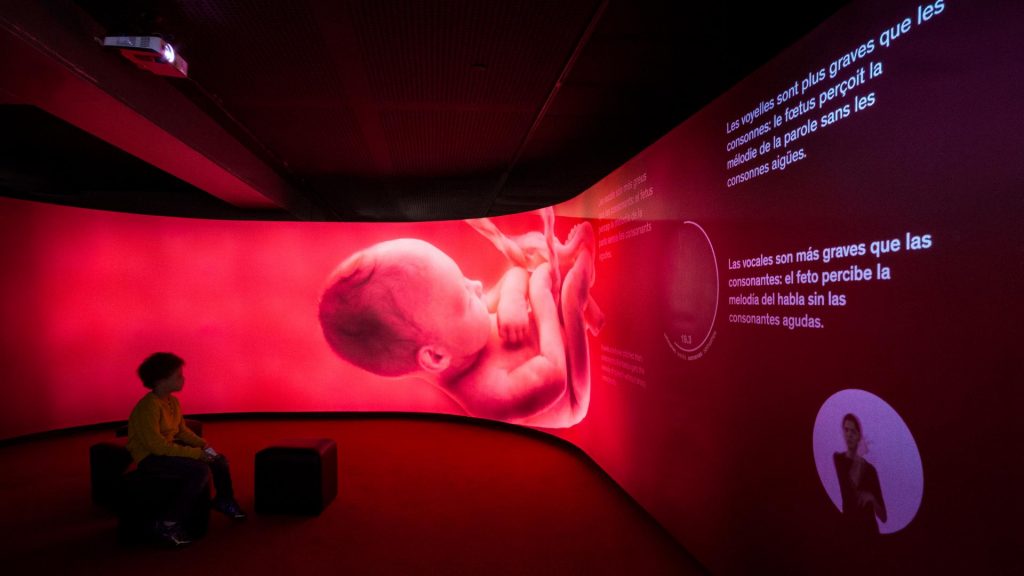
Knowledge should not be confined to books and laboratories. It must be set free to fly so that everyone can enjoy it. That is why I have carried out educational projects such as the Talking Brains exhibition for CosmoCaixa, my podcast on language Logonautes or some books for the general public. In this section you will find some of these educational adventures, created with the desire to discover the fascinating world of how we speak, listen and understand.